TripFinder

Compare multi-day small-group tours from independent operators, then ask a Canadian travel advisor for help.

Explore

Find tripsDestinationsTravel stylesDealsCompare trips

TripFinder

How it worksTalk to an agentAbout usContact

Good to know

Privacy PolicyCookie choicesTerms of UseTravel guides
TripFinder.ca helps you compare small-group trips from independent operators and book with a TripFinder travel advisor. Trips are operated by the tour companies under their own terms. © 2026 HighBar Enterprises Ltd.Made for adventurers in Canada 🍁
TripFinder
Find trips
DealsAsk TheoCompareHow it worksBrowse all trips
Galapagos Cruise & Peru in Depth (Grand Queen Beatriz)
Find trips›Ecuador›Galapagos Cruise & Peru in Depth (Grand Queen Beatriz)
ITOperated by Intrepid Travel

Galapagos Cruise & Peru in Depth (Grand Queen Beatriz)

From
CAD 20,925
Duration
24 days
Countries
Ecuador, Peru
Activity
moderate
Group size
Max 16
Rating
★ 5.0 · 1 reviewsvia Intrepid Travel →

The adventure

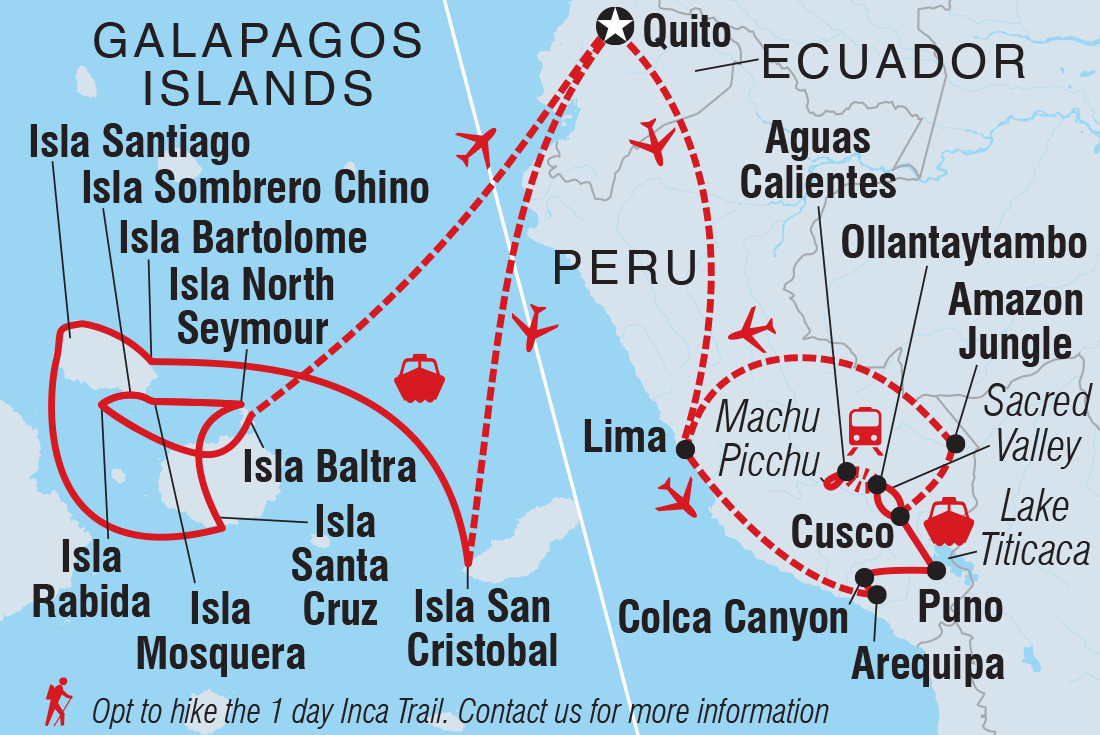
If you’re looking for an adventure of a lifetime, this 24-day journey from the waters of the Galapagos to Peru might just be it! On this adventure, spend ten days drifting across the Pacific Ocean and uncover the natural beauty and unique wildlife of the Ecuadorian Isles. Retrace the voyage of Charles Darwin by sea, admiring the sandy beaches of Espumilla and the volcanic craters of Isla Santiago. Look out for blue-footed boobies, Galapagos sea turtles and sea lions in their natural habitat, then fly to Peru for lush valleys, rich rainforests and the Inca heartlands. Travel south from Lima to Arequipa, see condors in Colca Canyon and get to the wild heart of the Amazon Jungle. Consider trekking along the acclaimed Inca Trail or relax on a scenic train ride to Machu Picchu – one of the Seven Wonders of the World. With a local leader each step of the way, you’ll get all the best insights, too!

◆Isla San Cristobal - Highlands Walk (1.5 hours) - Dry Landing
◆Isla Santiago - Sullivan Bay - Walk (1.5 hours) - Dry Landing
◆Isla Bartolome - Walk (1.5 hours) - Dry Landing
◆Isla Bartolome - Snorkelling (1.5 hours)
◆Isla Bartolome - Panga ride (30 mins)
◆Isla Santiago - Puerto Egas - Walk (1.45 hours) - Wet Landing
◆Isla Santiago - Puerto Egas - Snorkelling (1 hour)
◆Isla Sanitago - Espumilla Beach - Panga ride or Snorkelling (45 mins)
◆Isla Sanitago - Buccaneer's Cove - Panga Ride (45 mins)
◆Isla Santa Cruz - Highlands Visit (1.5 hours) - Dry Landing
◆Isla Santa Cruz - Charles Darwin Research Station (1 hour) - Dry Landing
◆Isla North Seymour - Walk (2 hours) - Dry Landing
◆Isla North Seymour - Snorkelling (1 hours)
◆Isla Mosquera - Snorkelling (1 hour)
◆Isla Mosquera - Beach Walk (1.5 hours) - Wet Landing
◆Isla Santa Cruz - Black Turtle Cove - Panga ride (1.5 hours)
◆Isla Santa Cruz - Cerro Dragon - Walk (1.5 hours) - Dry Landing
◆Isla Santa Cruz - Cerro Dragon - Snorkelling or swimming (1 hour)
◆Isla Santiago - Sombrero Chino - Snorkelling (1 hour)
◆Sombrero Chino - Walk and Panga ride (2 hours) - Wet Landing
◆Isla Rabida - Snorkelling (1 hour)
◆Isla Rabida - Walk (1.5 hours) - Wet Landing
◆Isla Santa Cruz - Bachas Beach Snorkel (1 hour) - Wet Landing
◆Isla Santa Cruz - Bachas Beach Walk (1 hour) - Wet Landing
◆Lima - Welcome Dinner
◆Complimentary Arrival Transfer
◆Arequipa - Leader-led orientation walk
◆Lima - Downtown walking tour
◆Arequipa - Walking tour
◆Arequipa - Santa Catalina Monastery Admission Fee
◆Arequipa - San Ignacio Chapel
◆Arequipa - Basilica Cathedral of Arequipa
◆Colca Canyon - Viewpoint photo stop
◆Colca Canyon - Mirador Cruz del Condor
◆Puno - Sillustani archaeological site
◆Lake Titicaca - Floating Uros Islands & Taquile Island
◆Cusco - Leader-led orientation walk
◆Raqchi Inca Site, between Puno and Cuzco
◆Cusco - Cathedral tour with Specialist Historian Guide
◆Cusco - Coricancha Temple (entrance fee)
◆Cusco - Walking tour
◆Ollantaytambo - Archaeological site
◆Sacred Valley - Community workshops visit
◆Sacred Valley - Home-cooked pachamanca lunch
◆Sacred Valley - Snack & drink at AMA Restaurant social enterprise
◆Machu Picchu - Entrance & Guided visit
◆Ollantaytambo - 360 degree train to Aguas Calientes
◆Machu Picchu - Second visit
◆Amazon Jungle - Night boat tour
◆Amazon Jungle - Oxbow Lake
◆Amazon Jungle - Canopy Walkway
◆Amazon Jungle - Night jungle walk
◆Lima - Farewell Dinner

At a glance

Duration
24 days
Route
Quito → Lima
Countries
Ecuador, Peru
Activity level
moderate
Style
Beach & Islands, Rail Journeys, Trekking & Hiking, Wildlife & Safari
Group size
Max 16
Ages
15+
Flights
Not included
Solo travellers
Welcome

Where you'll go

Galapagos Cruise & Peru in Depth (Grand Queen Beatriz) route map

Day by day

Breathtaking aerial shot of Cotopaxi Volcano with a lone house in El Corazón, Ecuador. Perfect for nature lovers.
Your journey through

Ecuador

Showing Days 1-7

10-day itinerary

Day 1QuitoArrive at Mariscal Sucre International Airport and be met and transferred to your hotel. The remainder of the day will be at your leisure until a welcome meeting at either 5 pm or 6 pm. After your welcome meeting, head out with your local leader and fellow travellers for a welcome dinner at a local restaurant. Try some traditional flavours and get to know you group as you settle into the coming adventure. Quito sits at high altitude under the towering Pichincha volcano. It is a beautiful city, arguably one of the most beautiful in South America. The city stretches along the valley and is surrounded by the Andes. The Old Town of Quito is awash with history, with more than 30 churches to explore, and a number of fascinating museums. La Compania de Jesus is considered to be the most beautiful and ornate churches in the Americas. The city's oldest street, Calle La Ronda, is well worth exploring.
Aerial view of Quito featuring Panecillo Hill and Virgin statue, capturing historic architecture and vibrant cityscape.Quito
Arrive at Mariscal Sucre International Airport and be met and transferred to your hotel. The remainder of the day will be at your leisure until a welcome meeting at either 5 pm or 6 pm. After your welcome meeting, head out with your local leader and fellow travellers for a welcome dinner at a local restaurant. Try some traditional flavours and get to know you group as you settle into the coming adventure. Quito sits at high altitude under the towering Pichincha volcano. It is a beautiful city, arguably one of the most beautiful in South America. The city stretches along the valley and is surrounded by the Andes. The Old Town of Quito is awash with history, with more than 30 churches to explore, and a number of fascinating museums. La Compania de Jesus is considered to be the most beautiful and ornate churches in the Americas. The city's oldest street, Calle La Ronda, is well worth exploring.
Map showing Quito
Day 2Quito - Isla San CristobalThis morning, you'll be transferred to the airport for your flight to the Galapagos Islands. Please note the pick-up time can be as early as 4.30 am (a boxed breakfast will be provided). When you arrive, you'll be met by the National Park Guide and transferred to your boat, the M/Y Grand Queen Beatriz – a first-class boat with all of the creature comforts you’ll need. This afternoon you'll travel into the interior of Isla San Cristobal to visit the highlands site of Galapaguera of Cerro Colorado (Red Hill) where the national park has established a breeding program and information centre for native tortoises. Here, you'll be able to see giant tortoises in their natural habitat and learn all about their origin, evolution and their threatened future.
Aerial view showcasing Quito's urban landscape with rolling hills and colorful rooftops.Quito
This morning, you'll be transferred to the airport for your flight to the Galapagos Islands. Please note the pick-up time can be as early as 4.30 am (a boxed breakfast will be provided). When you arrive, you'll be met by the National Park Guide and transferred to your boat, the M/Y Grand Queen Beatriz – a first-class boat with all of the creature comforts you’ll need. This afternoon you'll travel into the interior of Isla San Cristobal to visit the highlands site of Galapaguera of Cerro Colorado (Red Hill) where the national park has established a breeding program and information centre for native tortoises. Here, you'll be able to see giant tortoises in their natural habitat and learn all about their origin, evolution and their threatened future.
Map showing Quito
Day 3Isla Bartolome - Bahia SullivanHaving cruised overnight, arrive at Bartolome – one of the most spectacular volcanic landscapes in the Galapagos, full of parasitic cones, lava flows and home to Galapagos penguins and lava lizards. Bartolome is a relatively new island in the archipelago and traces of its volcanic past can be seen everywhere, as seen by the amazing lunar-like landscape. The Pinnacle Rock is one of the most photographed sites in the Galapagos – a rock structure protruding from the earth like a tooth, providing a focal point for two nearby bays. Head to nearby Isla Santiago, where you can hike to the top of a once-active volcano (360 wooden steps) and enjoy superb views across to Sullivan Bay. If you’re in luck, you might catch a glance of the Galapagos Hawk. You also have the opportunity to go snorkelling with plenty of tropical fish, starfish, white-tipped reef sharks, rays and (hopefully) penguins. On Santiago's eastern coast sits James Island. Here, take a walk on Pahoe-Hoe lava, from an eruption that occurred in 1897, and witness the regrowth of unique plant species since the last eruption. Look out for marine iguanas, Sally Lightfoot crabs, sea lions, finches, turtles, sharks and penguins. On a walk, your guide will explain the interesting geological history of the islands.
A dramatic view of Pinnacle Rock at sunset with rugged landscapes in the Galapagos Islands.Isla Bartolome
Having cruised overnight, arrive at Bartolome – one of the most spectacular volcanic landscapes in the Galapagos, full of parasitic cones, lava flows and home to Galapagos penguins and lava lizards. Bartolome is a relatively new island in the archipelago and traces of its volcanic past can be seen everywhere, as seen by the amazing lunar-like landscape. The Pinnacle Rock is one of the most photographed sites in the Galapagos – a rock structure protruding from the earth like a tooth, providing a focal point for two nearby bays. Head to nearby Isla Santiago, where you can hike to the top of a once-active volcano (360 wooden steps) and enjoy superb views across to Sullivan Bay. If you’re in luck, you might catch a glance of the Galapagos Hawk. You also have the opportunity to go snorkelling with plenty of tropical fish, starfish, white-tipped reef sharks, rays and (hopefully) penguins. On Santiago's eastern coast sits James Island. Here, take a walk on Pahoe-Hoe lava, from an eruption that occurred in 1897, and witness the regrowth of unique plant species since the last eruption. Look out for marine iguanas, Sally Lightfoot crabs, sea lions, finches, turtles, sharks and penguins. On a walk, your guide will explain the interesting geological history of the islands.
Day 4Isla Santiago - Espumilla Beach - Buccaneer Cove - Puerto EgasGalapagosStart the morning at Espumilla Beach, on the northern coast of Santiago in James Bay – one of the most idyllic locations in the Galapagos. With large waves, it's often a favourite among beach lovers, and is also an important nesting site for marine turtles. Look around and see Galapagos hawks, ghost crabs, blue-footed boobies (often plunging for fish) and brown pelicans up close. Espumilla is also well known for its forest of palo santo trees and some extraordinary lava formations. You'll also visit Caleta Bucanero (Buccaneer Cove), a natural monument of rocks caused by sea erosion. This cove was used by pirates to careen their ships. It is a place of local legends and stories, including where Charles Darwin camped for nine days while making his study of the islands and their wildlife. If conditions are favourable, you can enjoy some further snorkelling. The next stop is Puerto Egas, a black sand beach located on the west side of James Bay and northwest of Santiago. South of the beach is Sugarloaf Volcano, which has deposits of volcanic tuff. This site is named Puerto Egas, after Hector Egas who last attempted to mine salt here. On the walk along the beach, you’ll encounter hundreds of marine iguanas and Galapagos sea lions. You will also see amazing tidal pools formed from ancient lava flow and home to sponges, snails, hermit crabs, barnacles and fish. Snorkelling with the seals always offers the possibility of thrilling encounters.
Two Galápagos giant tortoises interacting in their natural habitat.Galapagos
Start the morning at Espumilla Beach, on the northern coast of Santiago in James Bay – one of the most idyllic locations in the Galapagos. With large waves, it's often a favourite among beach lovers, and is also an important nesting site for marine turtles. Look around and see Galapagos hawks, ghost crabs, blue-footed boobies (often plunging for fish) and brown pelicans up close. Espumilla is also well known for its forest of palo santo trees and some extraordinary lava formations. You'll also visit Caleta Bucanero (Buccaneer Cove), a natural monument of rocks caused by sea erosion. This cove was used by pirates to careen their ships. It is a place of local legends and stories, including where Charles Darwin camped for nine days while making his study of the islands and their wildlife. If conditions are favourable, you can enjoy some further snorkelling. The next stop is Puerto Egas, a black sand beach located on the west side of James Bay and northwest of Santiago. South of the beach is Sugarloaf Volcano, which has deposits of volcanic tuff. This site is named Puerto Egas, after Hector Egas who last attempted to mine salt here. On the walk along the beach, you’ll encounter hundreds of marine iguanas and Galapagos sea lions. You will also see amazing tidal pools formed from ancient lava flow and home to sponges, snails, hermit crabs, barnacles and fish. Snorkelling with the seals always offers the possibility of thrilling encounters.
Map showing Galapagos
Day 5Isla Santa Cruz - Charles Darwin Station - Santa Cruz HighlandsGalapagosToday you'll visit Isla Santa Cruz, the second largest island in the Galapagos. The small town of Puerto Ayora is the economic centre of the archipelago, and home to the Charles Darwin Research Station. As well as undertaking vital conservation work, the station also makes for interesting exploration and offers the best opportunities for close encounters with giant tortoises. You'll also see baby tortoises and land iguanas. After, head up into the highlands for a total change of scenery. Beginning at the coast you'll travel across Santa Cruz through the agricultural region and into the misty forests. This is a lush humid zone containing miconia bushes, scalesia and inactive volcanic cones. Santa Cruz has more endemic plants than any of the other islands. Plus, you are likely to see Galapagos giant tortoises in their natural habitat, and perhaps even the bright red feathers of a vermillion flycatcher!
Lava Gull perched on a rock, showcasing distinctive features in a natural habitat.Galapagos
Today you'll visit Isla Santa Cruz, the second largest island in the Galapagos. The small town of Puerto Ayora is the economic centre of the archipelago, and home to the Charles Darwin Research Station. As well as undertaking vital conservation work, the station also makes for interesting exploration and offers the best opportunities for close encounters with giant tortoises. You'll also see baby tortoises and land iguanas. After, head up into the highlands for a total change of scenery. Beginning at the coast you'll travel across Santa Cruz through the agricultural region and into the misty forests. This is a lush humid zone containing miconia bushes, scalesia and inactive volcanic cones. Santa Cruz has more endemic plants than any of the other islands. Plus, you are likely to see Galapagos giant tortoises in their natural habitat, and perhaps even the bright red feathers of a vermillion flycatcher!
Map showing Galapagos
Day 6North SeymourTake a morning excursion to North Seymour, which is one of the most visited islands in the Galapagos. The trail on North Seymour crosses inland through the island and then explores the rocky coast. Along the way, the trail passes colonies of blue footed boobies and frigate birds. The magnificent frigate bird, a large black bird with a long wingspan and a hooked beak, is extremely fast and has excellent vision. Frigate birds are known for the large red pouch on their necks. During mating season, the males throw back their heads, inflate the pouch (sometimes to the size of a soccer ball), and shake – trying to capture the attention of female frigates. Boobies and frigates have an interesting relationship. Sharing the same nesting area on North Seymour, blue-footed boobies nest on the ground making their nests from the twigs of the palo santos trees, while the frigate birds nest just above them in the saltbushes. Your walk is followed by snorkelling where you will discover a colourful variety of fish and, possibly, some white-tipped reef sharks, rays and sea lions. After lunch, visit the small sandy island of Mosquera, a relaxing stop situated between Baltra and North Seymour. Along the rocks and in the tide pool, Sally Lightfoot crabs (red lava crabs) scamper back and forth, skipping across small pools of water in search of food. These crabs with their bright red shell tops and blue under shells are stunning against the black lava. The island also has a very large colony of sea lions as well as a sizeable resident brown pelican population. Depending on the tides and visibility, you may have a chance to go snorkelling here.
Blue-footed Booby perched on a rocky cliff in the Galapagos Islands, showcasing unique wildlife photography.North Seymour
Take a morning excursion to North Seymour, which is one of the most visited islands in the Galapagos. The trail on North Seymour crosses inland through the island and then explores the rocky coast. Along the way, the trail passes colonies of blue footed boobies and frigate birds. The magnificent frigate bird, a large black bird with a long wingspan and a hooked beak, is extremely fast and has excellent vision. Frigate birds are known for the large red pouch on their necks. During mating season, the males throw back their heads, inflate the pouch (sometimes to the size of a soccer ball), and shake – trying to capture the attention of female frigates. Boobies and frigates have an interesting relationship. Sharing the same nesting area on North Seymour, blue-footed boobies nest on the ground making their nests from the twigs of the palo santos trees, while the frigate birds nest just above them in the saltbushes. Your walk is followed by snorkelling where you will discover a colourful variety of fish and, possibly, some white-tipped reef sharks, rays and sea lions. After lunch, visit the small sandy island of Mosquera, a relaxing stop situated between Baltra and North Seymour. Along the rocks and in the tide pool, Sally Lightfoot crabs (red lava crabs) scamper back and forth, skipping across small pools of water in search of food. These crabs with their bright red shell tops and blue under shells are stunning against the black lava. The island also has a very large colony of sea lions as well as a sizeable resident brown pelican population. Depending on the tides and visibility, you may have a chance to go snorkelling here.
Map showing North Seymour
Day 7Black Turtle Cove - Cerro DragonToday you'll take a panga (Zodiac boat) to Caleta Tortuga Negra (Black Turtle Cove) – a red mangrove wetland on the north shore of Isla Santa Cruz. Paddle among the cove’s peaceful waters, for your first taste of the underwater riches of this region – it’s a wonderful place to see green turtle and is a nursery for golden cow-nose rays, eagle rays and Galapagos sharks. There is also abundant birdlife, such as the yellow warblers and lava herons. This is also a breeding area for turtles, so it is not uncommon to see them mating. In the afternoon, cruise over for a walk on Cerro Dragon (Dragon Hill) this afternoon. This is one of the best places to see land iguanas in the islands! From your dry landing, you'll walk to a brackish lagoon frequented by lagoon birds including stilts, pintail ducks, sandpipers, sanderlings and occasionally flamingos. Further inland, the trail offers a beautiful view of the bay and the western area of the archipelago. This area is a nesting site for land iguanas, which is constantly monitored and assisted by the Charles Darwin Research Station. The arid-zone vegetation makes for an ideal location for birdwatching with Darwin's finches, Galapagos mockingbirds, the endemic Galapagos flycatcher and yellow warblers all regulars here. The path can be challenging but it will be worth it with a spectacular view of the bay!
Detailed close-up of a Galapagos tortoise, highlighting its rugged shell and serene expression.Black Turtle Cove
Today you'll take a panga (Zodiac boat) to Caleta Tortuga Negra (Black Turtle Cove) – a red mangrove wetland on the north shore of Isla Santa Cruz. Paddle among the cove’s peaceful waters, for your first taste of the underwater riches of this region – it’s a wonderful place to see green turtle and is a nursery for golden cow-nose rays, eagle rays and Galapagos sharks. There is also abundant birdlife, such as the yellow warblers and lava herons. This is also a breeding area for turtles, so it is not uncommon to see them mating. In the afternoon, cruise over for a walk on Cerro Dragon (Dragon Hill) this afternoon. This is one of the best places to see land iguanas in the islands! From your dry landing, you'll walk to a brackish lagoon frequented by lagoon birds including stilts, pintail ducks, sandpipers, sanderlings and occasionally flamingos. Further inland, the trail offers a beautiful view of the bay and the western area of the archipelago. This area is a nesting site for land iguanas, which is constantly monitored and assisted by the Charles Darwin Research Station. The arid-zone vegetation makes for an ideal location for birdwatching with Darwin's finches, Galapagos mockingbirds, the endemic Galapagos flycatcher and yellow warblers all regulars here. The path can be challenging but it will be worth it with a spectacular view of the bay!
1 / 2
Breathtaking view of snow-capped Andes mountains under blue skies in Cusco, Peru.
Your journey through

Peru

Showing Days 11-17

14-day itinerary

Day 11ArequipaStart the day with a walking tour with your leader through downtown Lima. Admire the buildings of Plaza Mayor and visit the eerie catacombs of the Saint Francis Monastery, then head away from the tourist trail to Alameda de Chabuca Granda – an area popular with the locals. Later, catch a flight to Arequipa – a beautiful Spanish colonial city. When you arrive, head out for an orientation walk with your leader. Known as La Ciudad Blanca (The White City), Arequipa’s buildings have been built almost exclusively from a white volcanic material called sillar, giving the city an appearance like no other. Situated in a valley at the foot of the El Misti volcano, the city also boasts a truly remarkable backdrop.
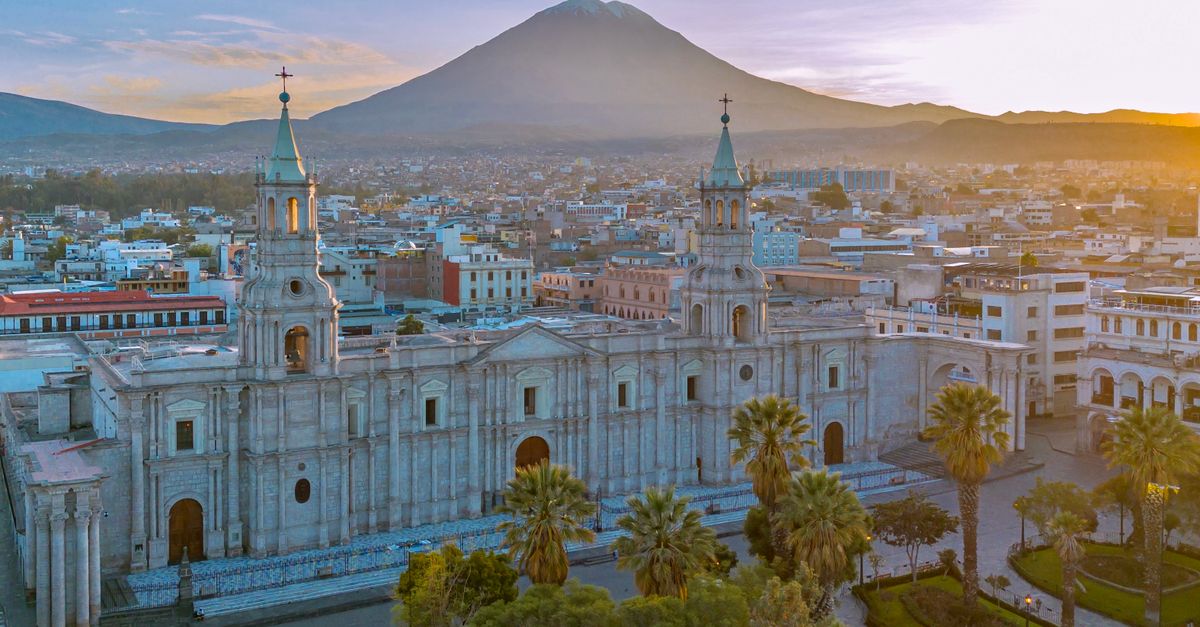
Drone shot of Arequipa's cathedral with El Misti volcano in the background at sunset.Arequipa
Start the day with a walking tour with your leader through downtown Lima. Admire the buildings of Plaza Mayor and visit the eerie catacombs of the Saint Francis Monastery, then head away from the tourist trail to Alameda de Chabuca Granda – an area popular with the locals. Later, catch a flight to Arequipa – a beautiful Spanish colonial city. When you arrive, head out for an orientation walk with your leader. Known as La Ciudad Blanca (The White City), Arequipa’s buildings have been built almost exclusively from a white volcanic material called sillar, giving the city an appearance like no other. Situated in a valley at the foot of the El Misti volcano, the city also boasts a truly remarkable backdrop.
Map showing Arequipa
Day 12ArequipaThis morning, meet a local guide who’s an expert on all things Arequipa and set out on a tour of the city. Explore Plaza de Armas, the city’s main square, then continue to the Santa Catalina Monastery while your guide shares stories of the city’s history along the way. Stop by the San Ignacio Chapel to appreciate its mural paintings. Visit the beautiful Basilica Cathedral of Arequipa with another local expert guide who will discuss the many layers of the building’s history – from its construction in 1656 to its subsequent destructions and rebuilds. The afternoon is free your own discoveries. Why not pick up an Alpaca jumper and meet the llamas and alpacas of Mundo Alpaca or take part in an active adventure in the surrounding hills and rivers. Or maybe visit the museum that houses 'Mummy Juanita' – the well-preserved body of a young Inca girl who died sometime between 1450 and 1480.
The majestic Basilica Cathedral of Arequipa under a clear blue sky, showcasing its classic architecture.Arequipa
This morning, meet a local guide who’s an expert on all things Arequipa and set out on a tour of the city. Explore Plaza de Armas, the city’s main square, then continue to the Santa Catalina Monastery while your guide shares stories of the city’s history along the way. Stop by the San Ignacio Chapel to appreciate its mural paintings. Visit the beautiful Basilica Cathedral of Arequipa with another local expert guide who will discuss the many layers of the building’s history – from its construction in 1656 to its subsequent destructions and rebuilds. The afternoon is free your own discoveries. Why not pick up an Alpaca jumper and meet the llamas and alpacas of Mundo Alpaca or take part in an active adventure in the surrounding hills and rivers. Or maybe visit the museum that houses 'Mummy Juanita' – the well-preserved body of a young Inca girl who died sometime between 1450 and 1480.
Map showing Arequipa
Day 13Colca CanyonThis morning, drive through the Altiplano high plains to the Colca Valley and Canyon. On the way you'll see grazing vicunas, llamas and alpacas, as well as stone cairns built by local Indigenous communities. More than twice as deep as the Grand Canyon, the Colca Canyon provides some breathtaking views. The pre-Inca terraces carved into its walls are still cultivated today, and the area is dotted with traditional Indian villages with locals in colourful dress. Stop at the highest point (4910 m) to enjoy views of the landscape below. Drive to the town of Chivay, where you'll have some time to soak up the local hot springs, then continue to the Aranwa Pueblito Encantado del Colca Hotel – your Feature Stay accommodation for the evening. With a prime location along the rugged Colca River, this resort offers tranquillity and comfort. The grounds feature tumbling waterfalls, organic gardens and pools, making this the perfect spot to explore. With modern rooms, first-class service and fantastic amenities, this stay is one to remember.
Scenic view of mist-covered mountains in Cabanaconde, Arequipa, Peru.Colca Canyon
This morning, drive through the Altiplano high plains to the Colca Valley and Canyon. On the way you'll see grazing vicunas, llamas and alpacas, as well as stone cairns built by local Indigenous communities. More than twice as deep as the Grand Canyon, the Colca Canyon provides some breathtaking views. The pre-Inca terraces carved into its walls are still cultivated today, and the area is dotted with traditional Indian villages with locals in colourful dress. Stop at the highest point (4910 m) to enjoy views of the landscape below. Drive to the town of Chivay, where you'll have some time to soak up the local hot springs, then continue to the Aranwa Pueblito Encantado del Colca Hotel – your Feature Stay accommodation for the evening. With a prime location along the rugged Colca River, this resort offers tranquillity and comfort. The grounds feature tumbling waterfalls, organic gardens and pools, making this the perfect spot to explore. With modern rooms, first-class service and fantastic amenities, this stay is one to remember.
Map showing Colca Canyon
Day 14Lake Titicaca - PunoRise early this morning to visit the Cruz del Condor viewpoint, where Andean condors, one of the world's largest flying birds, can often be seen soaring in the air. After lunch, begin the drive to Puno. On the way, you'll stop off at the Sillustani archaeological site for about an hour, where you'll climb to the top of the hill to appreciate the ruined 'chullpas', or funeral towers. These towers were built by a pre-Inca civilisation centuries ago to house the remains of noble men. Located on the shores of Lake Titicaca, Puno is full of Aymara and Quechuan Indian culture. The town is known as the folklore capital of Peru and is renowned for its traditional dances.
Breathtaking landscape of Lake Titicaca with a view of distant islands under dramatic skies.Lake Titicaca
Rise early this morning to visit the Cruz del Condor viewpoint, where Andean condors, one of the world's largest flying birds, can often be seen soaring in the air. After lunch, begin the drive to Puno. On the way, you'll stop off at the Sillustani archaeological site for about an hour, where you'll climb to the top of the hill to appreciate the ruined 'chullpas', or funeral towers. These towers were built by a pre-Inca civilisation centuries ago to house the remains of noble men. Located on the shores of Lake Titicaca, Puno is full of Aymara and Quechuan Indian culture. The town is known as the folklore capital of Peru and is renowned for its traditional dances.
Day 15Taquile - Lake Titicaca - PunoSee the striking scenery and unique cultures of the area on a cruise around Lake Titicaca today. This morning, depart from the port in Puno for the floating Uros Islands. The Uros people constructed these islands to isolate themselves from rival tribes in ancient times. They are built completely from multiple layers of totora reeds, which grow in the shallows of the lake. Call into Taquile Island, where you'll spend an hour walking to the top of the hill to see local traditional clothing and shops for woollen handicrafts. Explore this extraordinary place before traveling back to Puno for the evening. Back at your hotel, enjoy sunset over Lake Titicaca, while you sample wine and cheese in the garden.
Woman weaving traditional textiles in a colorful outdoor market setting.Taquile
See the striking scenery and unique cultures of the area on a cruise around Lake Titicaca today. This morning, depart from the port in Puno for the floating Uros Islands. The Uros people constructed these islands to isolate themselves from rival tribes in ancient times. They are built completely from multiple layers of totora reeds, which grow in the shallows of the lake. Call into Taquile Island, where you'll spend an hour walking to the top of the hill to see local traditional clothing and shops for woollen handicrafts. Explore this extraordinary place before traveling back to Puno for the evening. Back at your hotel, enjoy sunset over Lake Titicaca, while you sample wine and cheese in the garden.
Map showing Taquile
Day 16Raqchi - CuscoRise early and travel to Cusco. The journey will be broken up with plenty of stops, including a visit to the Raqchi Archaeological Site. Arrive in Cusco by late afternoon. Cusco is South America's oldest continuously inhabited city, and was the home of the Inca for two centuries before the Spanish built their first capital here. Today Cusco is a fascinating combination of both cultures. At 3450 m above sea level, it’s important to take time to acclimatise to the city’s altitude. After settling in at the hotel, take a casual walk around Plaza de Armas with your leader and pick up some excellent dinner recommendations along the way.
Beautiful landscape in Puno, Peru featuring a calm river and fluffy clouds under a bright blue sky.Raqchi
Rise early and travel to Cusco. The journey will be broken up with plenty of stops, including a visit to the Raqchi Archaeological Site. Arrive in Cusco by late afternoon. Cusco is South America's oldest continuously inhabited city, and was the home of the Inca for two centuries before the Spanish built their first capital here. Today Cusco is a fascinating combination of both cultures. At 3450 m above sea level, it’s important to take time to acclimatise to the city’s altitude. After settling in at the hotel, take a casual walk around Plaza de Armas with your leader and pick up some excellent dinner recommendations along the way.
Day 17CuscoThis morning, discover the best of Cusco on a walking tour. First, enjoy a special tour of the World Heritage-listed Cusco Cathedral with a local historian guide. Built on top of an Incan palace, the building is now one of Cusco’s greatest repositories of art, and your guide will share its history from past to present. Then, tour the Coricancha Temple with another local guide. The temple was once covered in sheets of gold that were eventually removed to raise a ransom for the life of Atahualpa, and later the Spanish demolished the temple to build a Dominican church on its foundations. Soon after, head to the colourful San Pedro market. The rest of the day is yours – speak to your leader about the option to arrange a cooking class at a local restaurant using fair trade products, or the half-day Inkilltambo trek, exploring an archaeologic site on the city’s outskirts.
View of brick buildings densely packed on a hillside, showcasing urban architecture.Cusco
This morning, discover the best of Cusco on a walking tour. First, enjoy a special tour of the World Heritage-listed Cusco Cathedral with a local historian guide. Built on top of an Incan palace, the building is now one of Cusco’s greatest repositories of art, and your guide will share its history from past to present. Then, tour the Coricancha Temple with another local guide. The temple was once covered in sheets of gold that were eventually removed to raise a ransom for the life of Atahualpa, and later the Spanish demolished the temple to build a Dominican church on its foundations. Soon after, head to the colourful San Pedro market. The rest of the day is yours – speak to your leader about the option to arrange a cooking class at a local restaurant using fair trade products, or the half-day Inkilltambo trek, exploring an archaeologic site on the city’s outskirts.
Map showing Cusco
1 / 2

What's included

Included
  • ✓Get a taste of the Galapagos, sailing through its central and eastern islands and look out for the giant Galapagos tortoises as well as blue-footed and masked boobies, pelicans and frigate birds, land and marine iguanas, sea lions, fur seals, dolphins, whales and sea turtles.
  • ✓Experience Peru's best during a full day of wildlife activities in the Amazon, explorations of Arequipa and Colca Canyon and two guided visits to Machu Picchu, reached by 360 train offering unbeatable views of the Andes.
  • ✓Taste the flavours of Peru during Signature Experiences, including dinner at one of Lima’s best restaurants, a snack at a cafe helping single mothers and a home-cooked pachamanca lunch in the Sacred Valley.
  • ✓Take in truly stunning surroundings at your Feature Stay hotel along the Colca River, offering grounds dotted with waterfalls, organic gardens and pools, plus modern rooms, first-class service and fantastic amenities.
  • ✓Get to know the real Peru as you travel with a local leader, stay in a stunning eco-lodge in the Amazon, visit a local community in the Sacred Valley and explore with specialist guides in Cusco and Machu Picchu.

Traveller reviews

5.0
★★★★★

Based on 1 reviews · via Intrepid Travel →

Discover Ecuador

A glimpse of the destination you'll explore.

Majestic view of Cotopaxi volcano surrounded by vibrant wildflowers under a clear blue sky.
Stunning aerial view of Quilotoa Crater Lake surrounded by mountains under a vibrant blue sky.
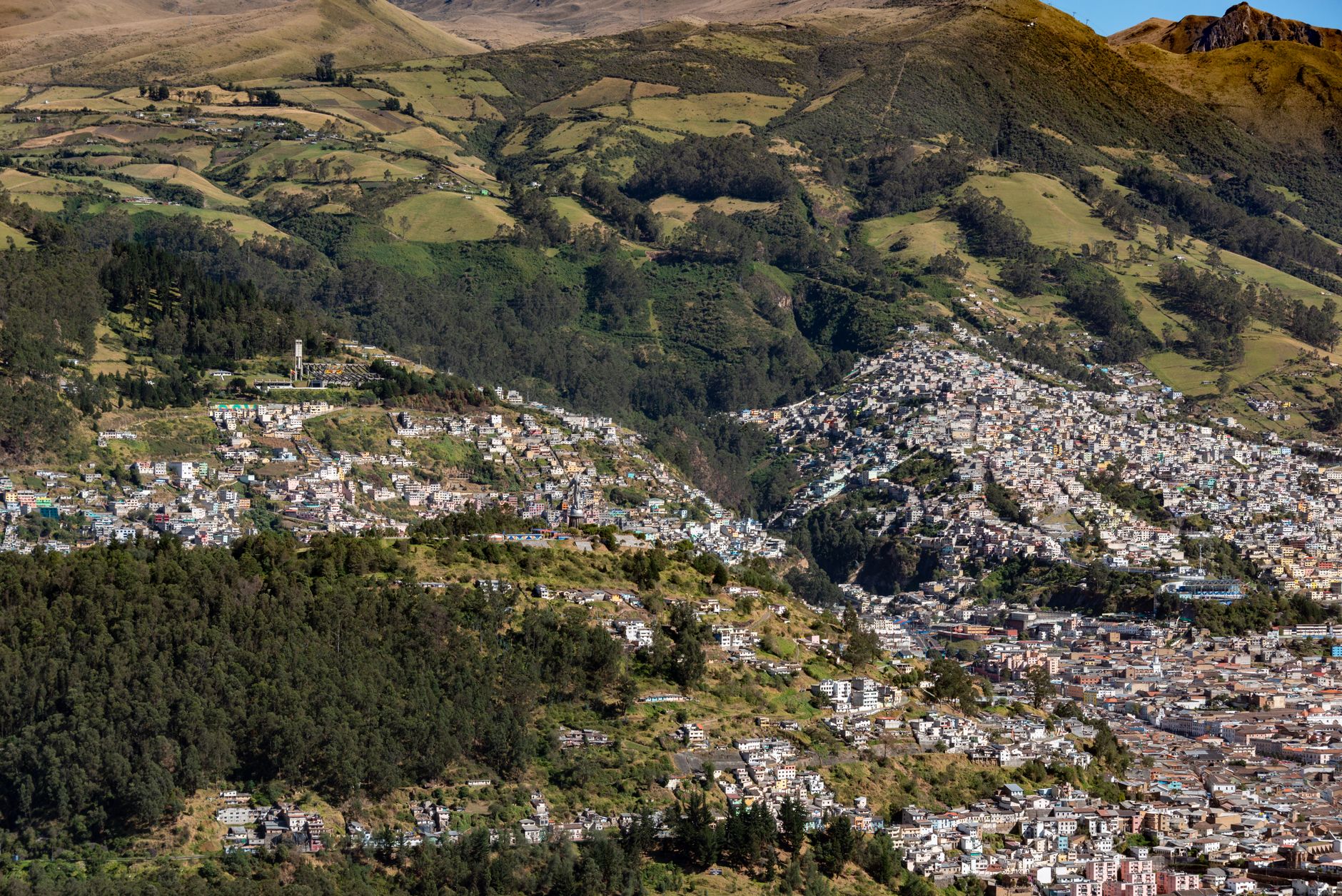
A stunning aerial view of the hillside towns and lush greenery in Quito, Ecuador.
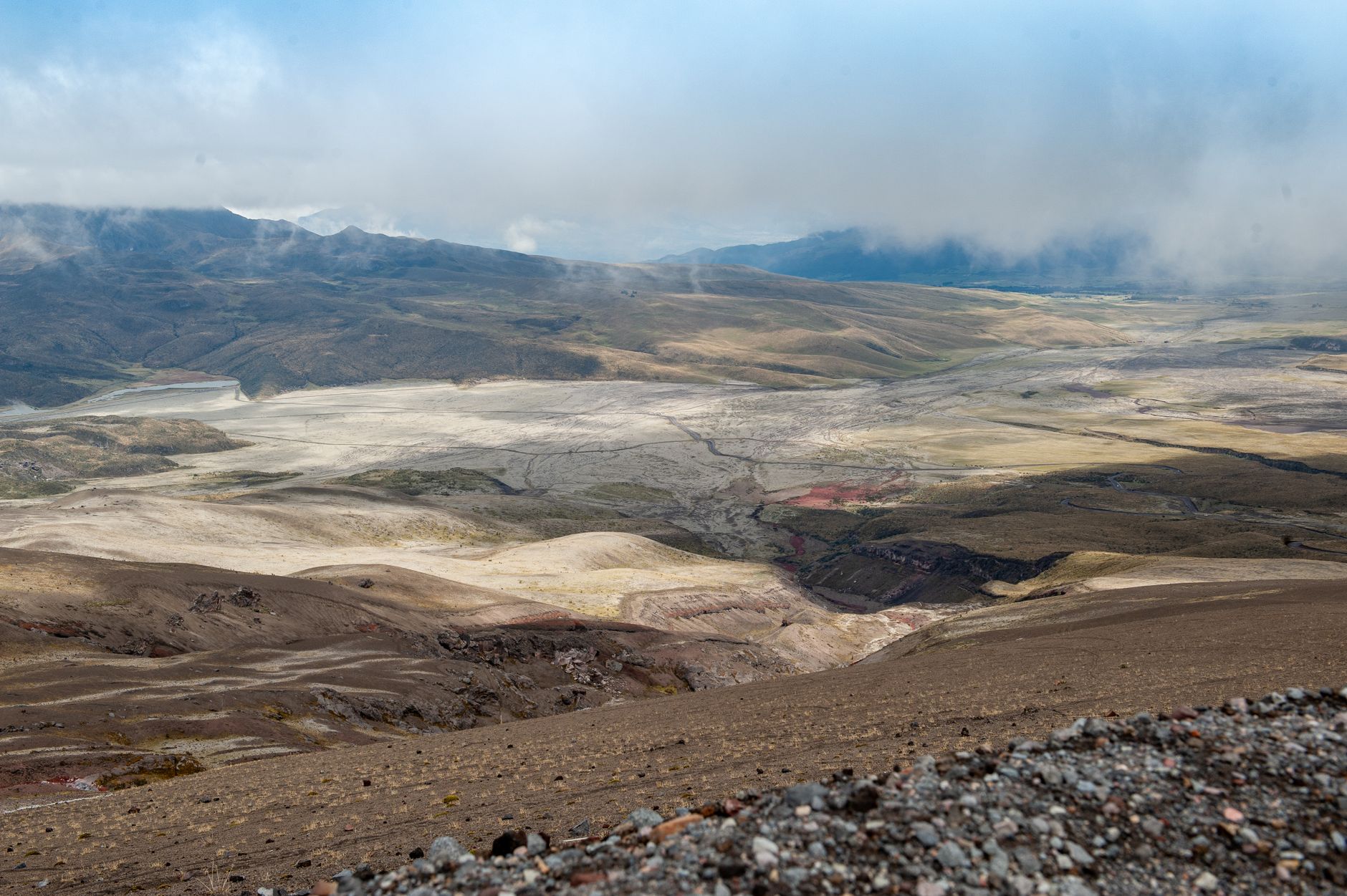
Breathtaking view of Cotopaxi Volcano in Ecuador, showcasing barren, eroded landscapes and clouds.
Explore the tranquil beauty of a remote lake nestled amid lush mountains, offering a peaceful escape.

Upcoming departures

DatesPrice / personAvailability
29 Aug – 21 Sep 2026
CAD 21,460On request
Book my trip
29 Aug – 21 Sep 2026
CAD 21,460On request
Book my trip
29 Aug – 21 Sep 2026
CAD 21,545On request
Book my trip
29 Aug – 21 Sep 2026
CAD 20,925On request
Book my trip
29 Aug – 21 Sep 2026
CAD 21,545On request
Book my trip
29 Aug – 21 Sep 2026
CAD 20,925On request
Book my trip
IT
Operated by Intrepid Travel

TripFinder compares the available catalog facts and can help with the booking. You travel under the operator's terms; final price and availability are confirmed before purchase.

Book my trip →
Ask Theo about this trip
From
CAD 20,925 CAD / person
Twin share · prices may vary by departure
Next departures
Aug 29, 2026CAD 21,460 · on request
Aug 29, 2026CAD 21,545 · on request
See all 78 departures →
Book my trip
No payment now — tell us a few details and an expert confirms everything & finishes your booking.
✓No payment & no obligation to send a request
✓An expert confirms by email or phone — your choice
Prefer to talk first? Send a request and choose phone as your contact preference.
Operated by Intrepid Travel · view on operator site ↗

More South America adventures

OpeningLima to Rio: Coast to Coast image
GG Adventures
Save 20%

Lima to Rio: Coast to Coast

Argentina, Bolivia, Brazil, Chile, Uruguay, Peru · 51 days · Active

fromCAD 8,919
Next: 02 Aug
OpeningEpic South America trip photo
ITIntrepid Travel
Deal

Epic South America

Argentina, Bolivia, Brazil, Chile, Peru, Uruguay · 39 days · Moderate★4.2(6)

fromCAD 8,806
Next: 12 Aug
OpeningQuito to La Paz: Amazon & Ancient Cultures image
GG Adventures
Save 20%

Quito to La Paz: Amazon & Ancient Cultures

Ecuador, Bolivia, Peru · 35 days · Active

fromCAD 4,767
Next: 02 Aug
From
CAD 20,925/ person
Book my trip